


Psychometric testing has become a standard part of evidence-based hiring, yet the term covers several quite different instruments. Two of the most widely adopted — the personality test and the work motivation or values test — are often treated as interchangeable. They are not. Each measures something distinct, answers a different question about a candidate, and informs a different kind of decision. Understanding where the two diverge helps employers select the right instrument, interpret the results correctly, and avoid the common mistake of expecting a single assessment to do the work of two.
What a personality test measures
A personality test describes how a person typically thinks, feels and behaves. It maps relatively stable traits — the consistent patterns that shape someone’s working style across situations and over time. The most widely validated framework is the five-factor model, often referred to as the Big Five or OCEAN, which assesses openness, conscientiousness, extraversion, agreeableness and emotional stability. Rather than assigning people to fixed categories, a well-constructed instrument shows where someone sits on a continuous scale for each trait.
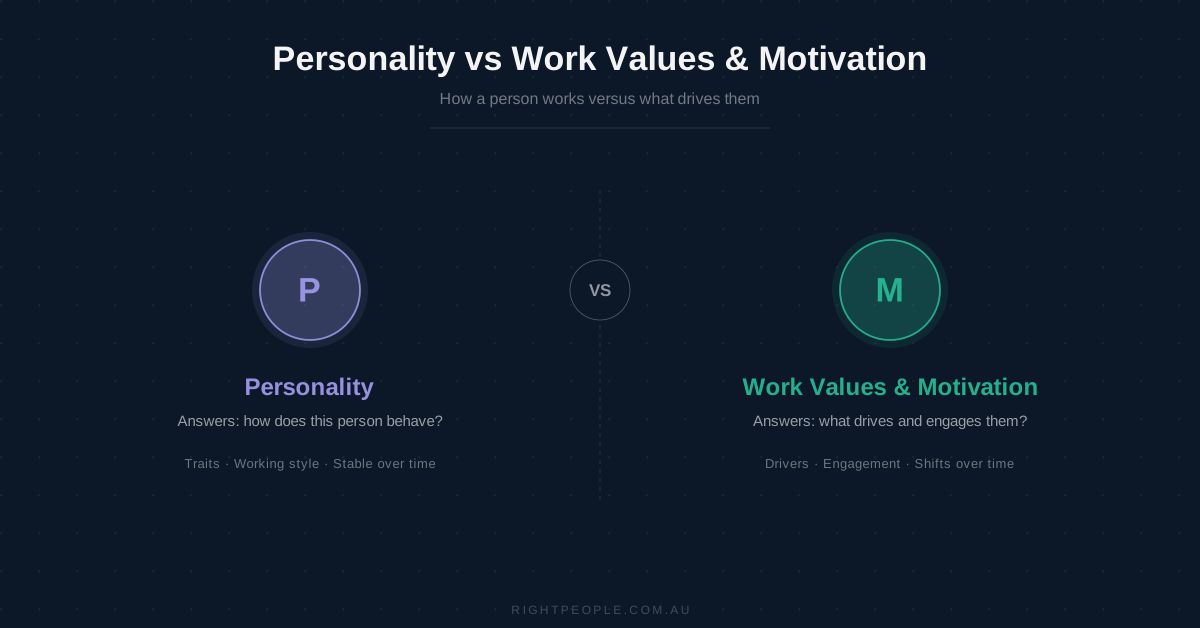
In short, a personality assessment answers the question, how does this person behave? It is useful for anticipating working style, communication preferences, and how an individual is likely to operate within a team. Because traits remain comparatively stable across adulthood, the profile a candidate produces today is a reasonable guide to how they will approach their work in the years ahead.
What a work motivation and values test measures
A work motivation and values test answers an entirely different question. Instead of describing how a person behaves, it examines what drives them — the underlying needs, preferences and priorities that determine what they find rewarding and where they will stay engaged. Common dimensions include achievement, autonomy, security, recognition, affiliation, influence and a sense of purpose. Values reflect what a person considers important; motivation reflects what energises them to act.
This kind of assessment answers the question, what does this person want, and what conditions will keep them engaged? Two candidates can share an almost identical personality profile yet be motivated by very different things — one by independence and variety, the other by stability and clear structure. That difference rarely shows up in a personality test, but it has a direct bearing on whether a person will thrive in a particular role and culture.
Values test vs personality test: the core difference
The cleanest way to hold the distinction in mind is that a personality test measures the how of working behaviour, while a work motivation and values test measures the what and the why behind it. The two are complementary rather than competing, and the table below sets out where they part ways.
| Dimension | Personality test | Work motivation and values test |
|---|---|---|
| What it measures | Typical behavioural style and traits | Underlying drivers, needs and values |
| The question it answers | How does this person behave? | What does this person want, and what keeps them engaged? |
| Stability over time | Relatively stable across adulthood | Can shift with life stage, career stage and circumstances |
| Best predicts | Behavioural fit, working style, team dynamics | Engagement, retention, and cultural and role fit |
| Typical framework | Five-factor model (Big Five / OCEAN) | Work values and motivation inventory |
It is worth noting that neither instrument has right or wrong answers. Both are self-report measures designed to describe rather than to judge, and both depend on honest responses and professional interpretation to be of any real value.
Why the distinction matters when hiring
The practical consequence of confusing the two is costly. A candidate can present the ideal personality profile for a role — diligent, calm under pressure, naturally collaborative — and still leave within twelve months because the position fails to satisfy what they value. If that person is driven by autonomy and continual learning but lands in a tightly controlled, repetitive role, no amount of behavioural suitability will keep them engaged.
This is why motivation and values data is so closely tied to retention and engagement, whereas personality data speaks more directly to working style and behavioural fit. An organisation that screens only for personality may hire people who can do the job well but who quietly disengage; one that considers motivation and values as well is far better placed to predict who will stay, contribute and grow.
Should the two be used together?
In most considered hiring and development decisions, the answer is yes. Personality and motivation assessments illuminate different parts of the same picture: personality explains the manner in which someone will work, while motivation and values explain whether the role and the culture will sustain them. Used together within a structured psychometric testing process, they give a far more complete view of a candidate than either could provide alone — and they help guard against the trap of hiring for capability while overlooking fit.
The combination is particularly valuable for senior appointments, long-term hires and internal development, where the cost of a mismatch is high and the relationship is expected to last.
Which assessment should you choose?
The right choice depends on the decision in front of you. If your priority is to understand a candidate’s behavioural style, communication approach or likely team dynamics, a personality test is the appropriate tool. If your priority is to predict engagement, cultural alignment and how long someone is likely to stay, a work motivation and values assessment is better suited. For roles where both the behaviour and the longevity of the hire matter — which describes most professional and leadership positions — using the two in combination is the soundest approach. If you are unsure which instruments best fit a particular role, our team is happy to advise as part of a broader pre-employment testing programme.
Frequently asked questions
Is a values test the same as a culture-fit test?
They are closely related but not identical. A values test measures what an individual considers important and is motivated by, while culture fit concerns how well those values align with the organisation’s environment. A values assessment provides the data; judging the fit is the step that follows, by comparing the individual’s drivers against the realities of the role and the workplace.
Can someone change their motivations and values?
To a degree, yes. Unlike personality traits, which remain comparatively stable across adulthood, motivations and values can shift with life stage, career stage and personal circumstances. Someone early in their career may prioritise rapid advancement and learning, while later prioritising stability or autonomy. This is precisely why motivation data should be read as a current snapshot rather than a fixed verdict.
Do personality and motivation tests have right or wrong answers?
No. Both are self-report instruments designed to describe a person rather than to pass or fail them. Their accuracy depends on honest responses and on professional, evidence-based interpretation — which is why results are best reviewed alongside structured interviews and other selection information rather than read in isolation.
Which test best predicts how long an employee will stay?
In the values test vs personality test comparison, the motivation and values assessment is generally the stronger predictor of retention, because it reveals whether a role satisfies what genuinely drives a person. Personality data contributes useful context about working style and resilience, but the question of whether someone will remain engaged over time is more directly answered by understanding what they value.
To explore the full range of assessments available, visit the RightPeople blog for further guidance on evidence-based hiring.


